

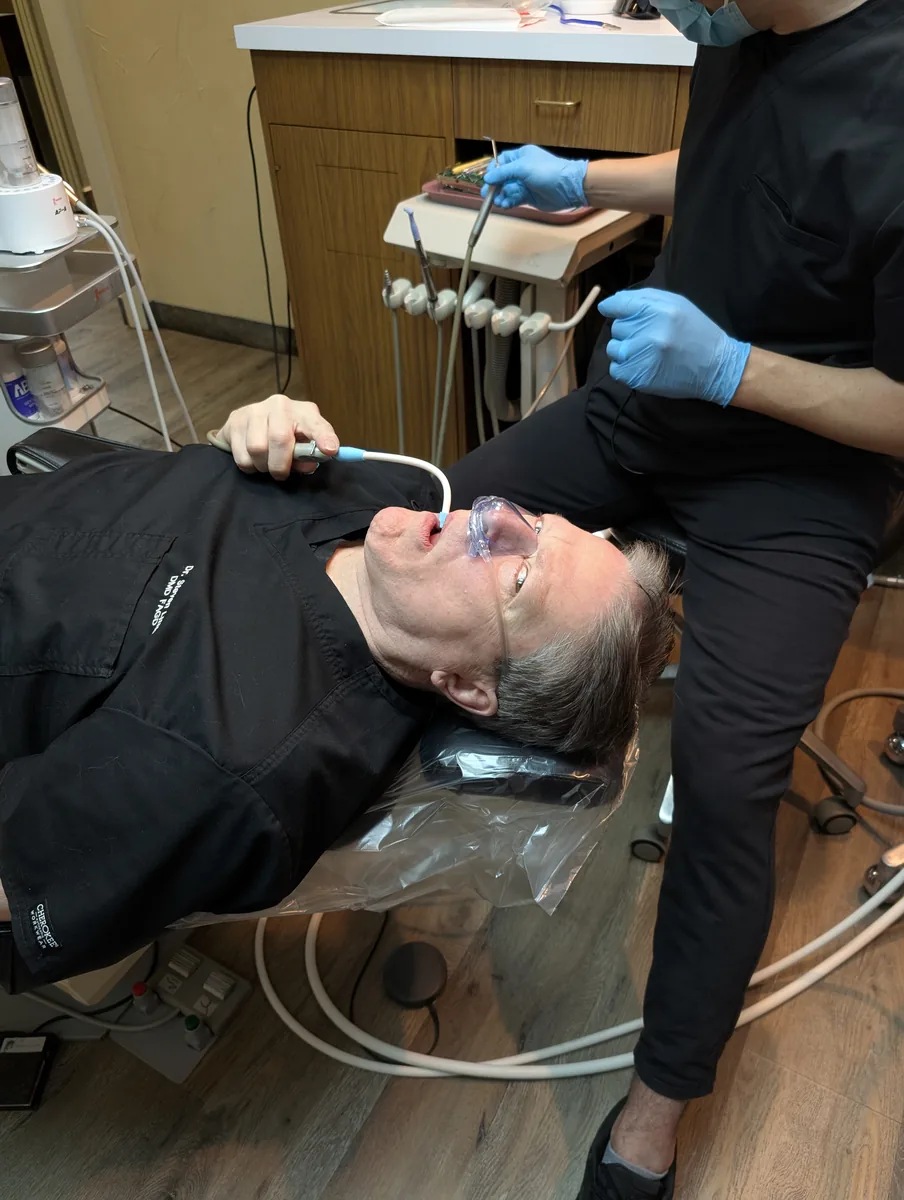
By Dr. Steven Little, Fear Free Dental
I have a confession to make.
I’m a dentist. I’ve been practicing dentistry for over 30 years. I’ve performed thousands of procedures, given countless injections, and helped patients through some of their most frightening dental experiences.
And I’m terrified of going to the dentist.
Yep. You read that right.
Now, here’s the strange part. I’m not afraid of needles. I’m not afraid of the drill. I’m not afraid of pain, or even the dental procedures themselves.
I’m afraid of water in the back of my throat.
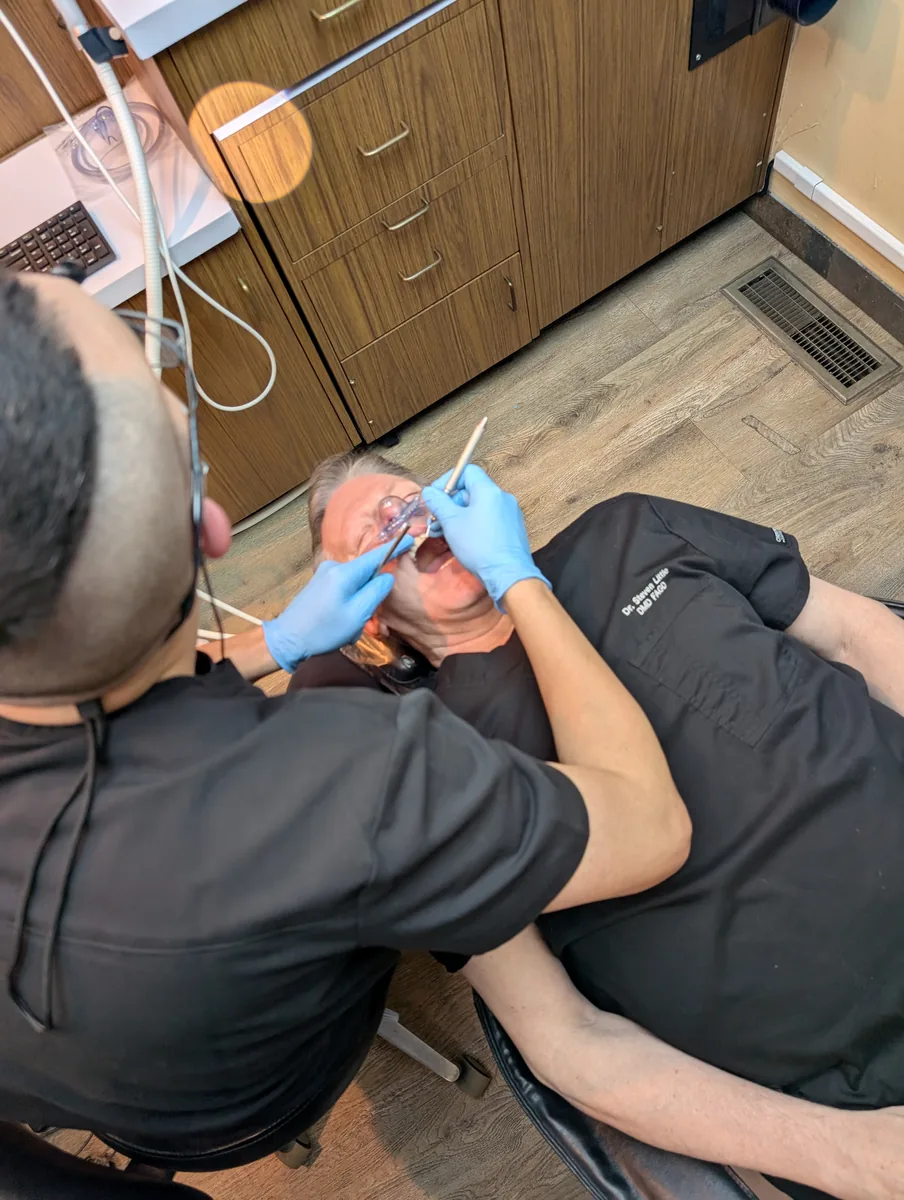
That’s it. Something as simple as lying back in a dental chair with water collecting in my throat can send my anxiety through the roof.
In fact, I need nitrous oxide — laughing gas — just to have my teeth cleaned.
My staff gets a good laugh out of that one. A dentist who needs laughing gas for a cleaning? Really?
But there’s a story behind it. At least, I think there is.
A Little Boy, a Dock, and a Very Scary Day

When I was a little boy in the 1960s, my family lived in Southern California. My grandfather had a beach house in Huntington Harbor, complete with a dock where we loved to play.
This was the 1960s. We didn’t wear bicycle helmets, skateboard helmets, or even life jackets much of the time. We were kids. We played. And somehow, most of us survived.
One afternoon, I was out on the dock by myself, swishing a stick around in the water.
And I fell in.
I still remember parts of what happened with remarkable clarity.
I remember sinking until my feet touched the muddy bottom. I remember pushing myself upward, trying to get back to the surface. I remember thinking that I should know how to swim because I’d watched swimmers in the Olympics.
It’s funny what goes through a little kid’s mind when he’s in trouble.
I made it to the surface, but I couldn’t get enough air. Then I sank again.
I remember my feet touching the mud and trying desperately to paddle my way back up.
And then nothing.
Inside the house, someone happened to look out toward the dock.
“Where’s Steve? He was just out there!”
My grandfather came running, jumped into the harbor, and pulled me out.
I had stopped breathing.
From what my family later told me, my grandparents worked to revive me. Someone turned me over, patted my back, and gave me mouth-to-mouth resuscitation.
Eventually, I started coughing and breathing again.
My next memory is sitting on one of my grandparents’ laps, having my picture taken.
I also remember what Grandpa did afterward.
He went out and bought life jackets and built a little storage box beside the dock. From that day forward, nobody was allowed onto that dock without wearing one.
Grandpa wasn’t taking any more chances.
Fifty-Something Years Later, I Finally Made a Connection
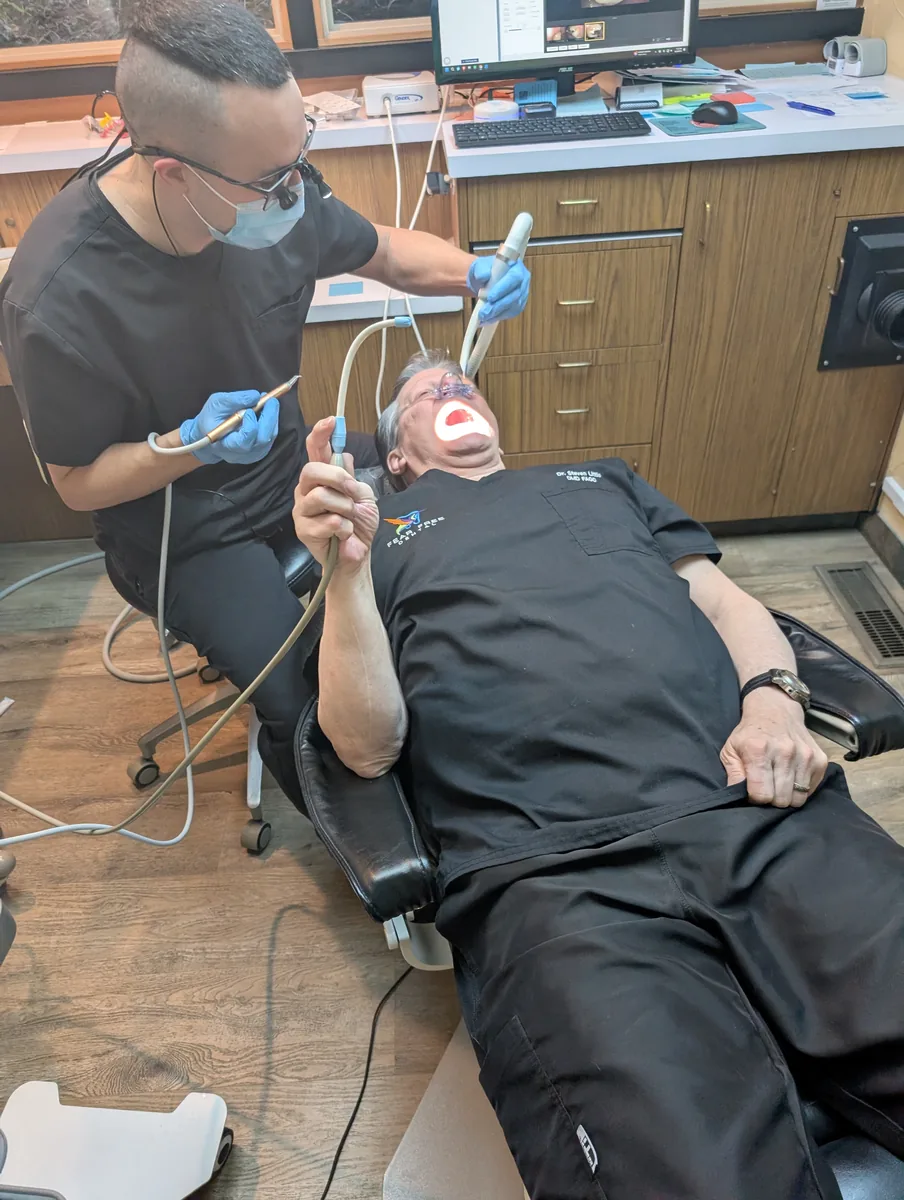
For most of my life, I never really understood why I reacted so strongly to water in my throat.
I knew it bothered me. I knew nitrous oxide helped. And I knew that no amount of telling myself to relax made much difference.
Then, about a year or so ago, I started thinking about that childhood experience.
Could nearly drowning as a little boy have something to do with my fear of lying back in a dental chair with water in my throat?
I can’t prove it.
But it certainly makes sense to me.
Maybe my brain remembers something that the rest of me has spent a lifetime trying to forget.
And that realization changed the way I thought about some of the patients I’ve treated over the years.
“Doctor, I Don’t Know Why I’m Crying.”
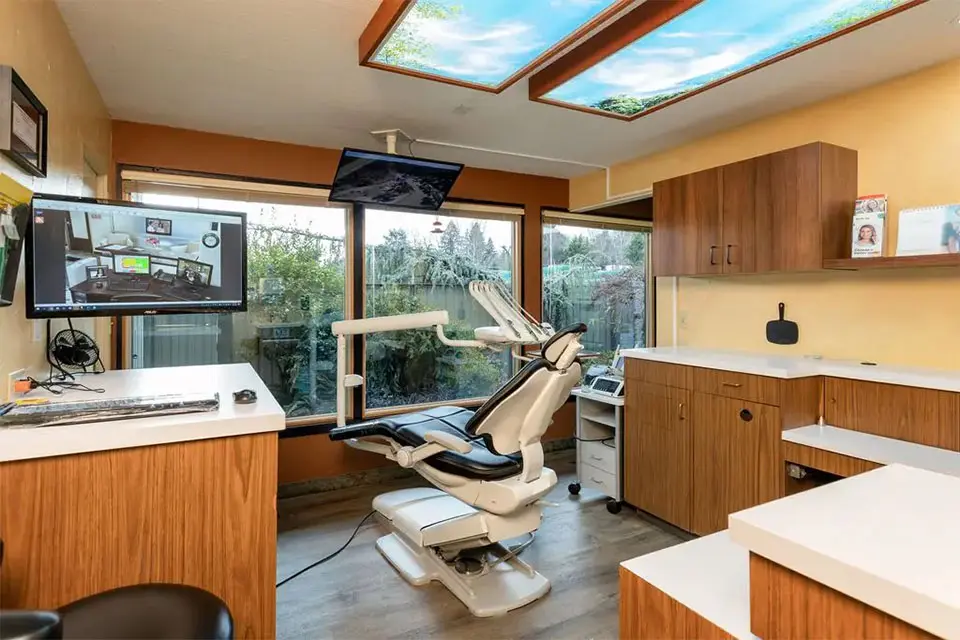
I remember one particular patient who came in for treatment with IV sedation.
She was a wonderful patient. Intelligent, reasonable, and fully aware that she was in good hands.
But as we were getting ready, she started crying.
Not just a few tears. She was absolutely bawling.
And she kept saying something I’ll never forget.
“I’m not afraid of you. I’m not afraid of the procedure. I don’t even know why I’m crying AND I’M AN ADULT!!!!!”
Eventually, we all started laughing together.
Not because her fear was funny, but because the situation was so wonderfully human.
Here was a grown woman trying to reason her way out of an emotional response that simply wasn’t listening to reason.
She knew she was safe.
She knew we weren’t going to hurt her.
She knew she didn’t have anything to be embarrassed about.
And she still couldn’t stop crying.
I understood her better than she probably realized.
After all, I’m the dentist who needs laughing gas to get his teeth cleaned.
Your Body Doesn’t Always Listen to Your Brain

One of the fascinating things about providing IV sedation is that we get to see just how real dental anxiety can be.
Patients sometimes come in exhausted because they’ve barely slept the night before. Once they’re comfortable and the sedation begins working, they relax so deeply that they drift off to sleep.
Sometimes they’re even snoring.
But here’s something interesting.
Even when a patient appears completely relaxed, we can see their body responding to what’s happening around them.
We monitor heart rate, blood pressure, oxygen levels, and other vital signs throughout sedation.
Sometimes, when a handpiece starts, or there’s activity in the room, we can see their heart rate or blood pressure change.
Their body is responding, even when they don’t appear consciously frightened.
Now, not every change in a monitor reading means fear. There are several reasons vital signs can fluctuate.
But after years of watching patients under sedation, I’ve come to appreciate that anxiety isn’t always something a person can simply decide to turn off.
Fear isn’t always rational. But that doesn’t make it any less real.
Something Dental School Didn’t Teach Me
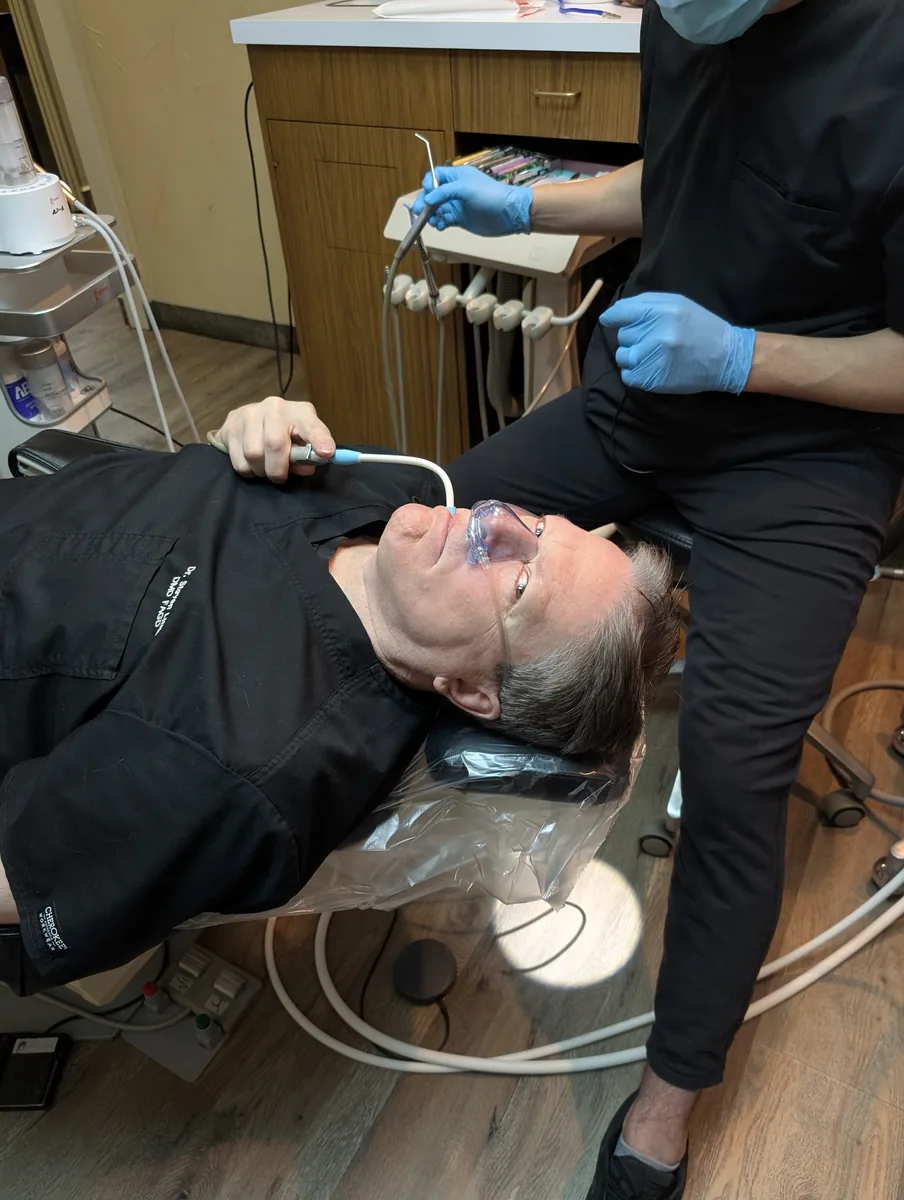
Dental school taught me how to diagnose disease, restore teeth, perform surgery, and manage pain.
But there was one thing I don’t think we spent nearly enough time learning.
How to really listen to someone who’s afraid.
Not just asking, “Are you nervous?”
I mean slowing down long enough to understand that sometimes a patient doesn’t even know why they’re afraid.
Maybe they had a bad dental experience as a child.
Maybe they hate the sound of a drill.
Maybe they feel trapped when they’re lying back.
Maybe they can’t stand having water in their throat.
Or maybe they have absolutely no idea why they’re frightened.
And that’s okay.
They shouldn’t have to explain or justify their fear before we take it seriously.
We have ways to help, whether that’s taking more time, changing how we position the chair, giving patients more control, using nitrous oxide, or providing sedation when appropriate.
But none of those things matter much if we don’t first listen.
Sometimes the Best Thing a Dentist Can Do Is Slow Down
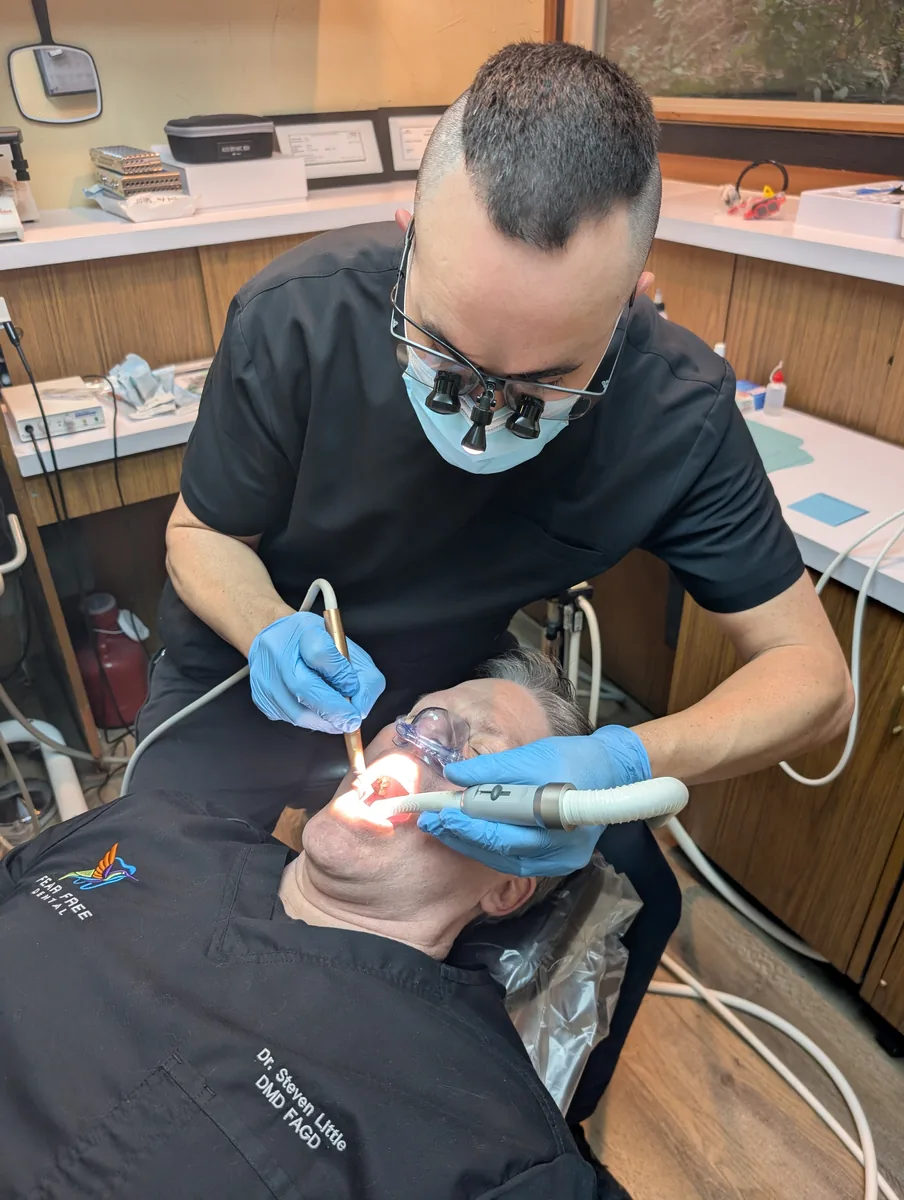
I’ve spent more than 30 years trying to help people feel comfortable in a place where many of them would rather not be.
And I think one of the most valuable lessons I’ve learned came not from a textbook, but from a little boy falling off a dock in Huntington Harbor.
I know what it’s like to be afraid of something that other people don’t understand.
I know what it’s like to have someone tell you, “There’s nothing to be afraid of,” when every part of your body is telling you otherwise.
And I know how much difference it makes when someone simply takes your fear seriously.
So if you’re afraid of the dentist, I want you to know something.
You don’t have to be embarrassed.
You don’t have to apologize.
And you certainly don’t have to explain why you’re afraid.
Because if your dentist can be afraid of the dentist, you’re in pretty good company.
At Fear Free Dental, we believe the first step toward making you comfortable isn’t picking up an instrument.
It’s listening to your story.
Finding Ways to Make You Smile 🙂